 INSTAGRAM
 YOUTUBE
 FACEBOOK
 TELEGRAM
 TIKTOK
 TWITTER



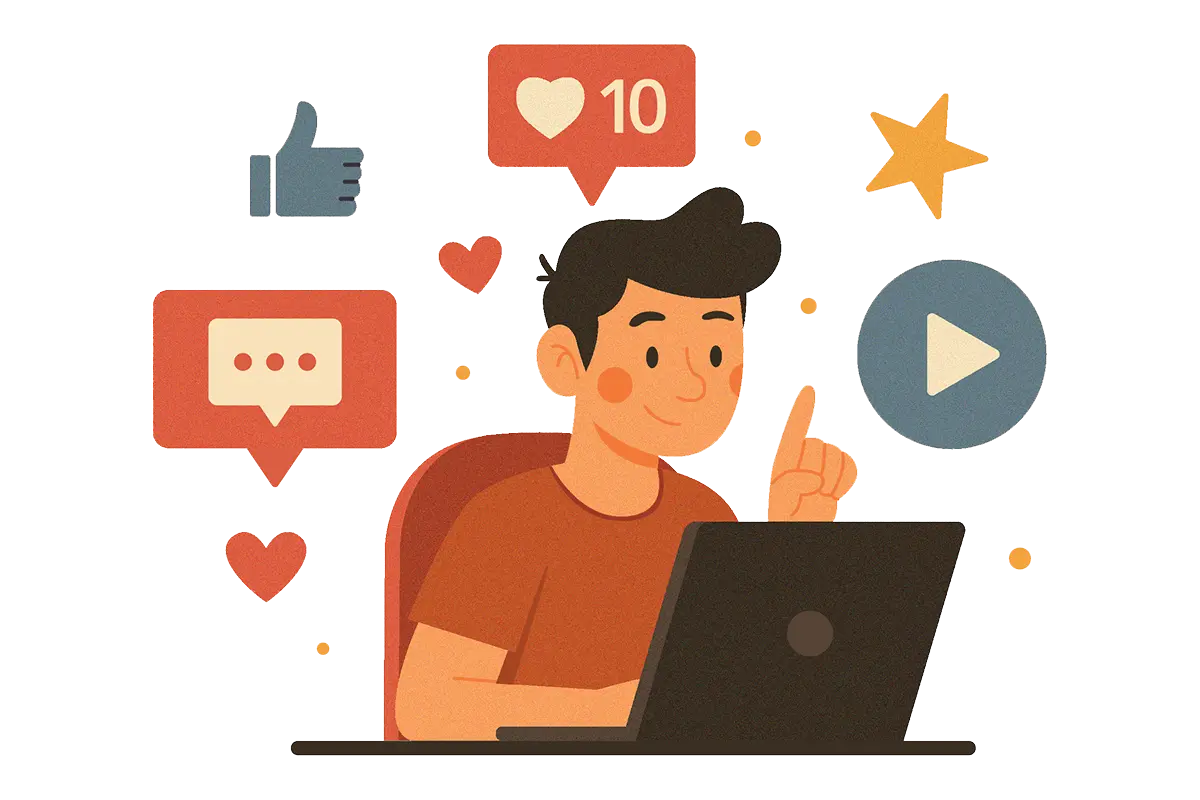
Managing one social media profile is relatively simple. Managing Instagram, TikTok, YouTube, LinkedIn, Facebook, X and Telegram accounts for a creator, company or several clients is a completely different situation. Passwords multiply, team members come and go, recovery emails become difficult to track, old devices remain connected and one careless login can affect an account that has taken years to build.
Good social media account security is therefore not just about creating a difficult password. It is about building a repeatable management system that keeps private credentials, recovery information, publishing access and public growth activity separate from one another. The following six-step framework is designed for creators, agencies and businesses that need stronger security without turning everyday social media management into an unnecessarily complicated process.
Security principle: Every important social media account should have its own credentials, reliable recovery information, an additional authentication method and a clearly defined list of people who are allowed to access it. The more valuable an account becomes, the less acceptable informal password sharing becomes.
1. Create an Inventory of Every Account You Manage
Security problems often begin because nobody has a complete picture of the accounts that exist. A company may have an active Instagram profile, an old TikTok account created by a former employee, two YouTube channels, a LinkedIn Page, several Facebook assets and a Telegram channel managed from somebody’s personal phone. When access information is scattered across messages, browsers and individual employees, losing control becomes much easier.
Create a simple account inventory that records the platform, public username, account owner, recovery email, recovery phone if applicable, people with approved access and whether additional authentication is enabled. Do not place passwords directly inside an ordinary spreadsheet. The purpose of the inventory is to show what exists and who controls it, while credentials should remain inside an appropriate password-management system.
This exercise also helps with content strategy. If several channels are active, decide what each one is supposed to accomplish instead of maintaining accounts simply because they were created years ago. Our guide to building a LinkedIn personal brand, for example, explains why a professional profile needs a clear purpose rather than becoming another place where identical content is automatically published.
2. Use Unique Passwords Instead of One Shared Formula
One of the most dangerous shortcuts in multi-account management is using the same password everywhere or creating predictable variations such as “BrandInstagram2026!”, “BrandTikTok2026!” and “BrandYouTube2026!”. Those passwords may technically look different, but they still follow the same recognizable pattern. If one credential becomes exposed, the structure makes other accounts easier to guess.
A better approach is to create a genuinely separate credential for every important account. BuztGrowth’s Password Generator can create randomized passwords without relying on names, birthdays, usernames or repeated phrases. Store the resulting credentials in a reputable password manager rather than simplifying them until they become easy to remember. NIST’s password security guidance similarly recommends using password managers and adding multifactor authentication instead of depending on passwords alone.
| Practice | Risk Level | Better Approach |
|---|---|---|
| Same password on every platform | High | Unique credential for each account |
| Brand name + current year | High | Random or independently generated password |
| Password stored in group chat | High | Controlled password manager access |
| Unique password + additional authentication | Lower | Recommended for important accounts |
3. Enable Stronger Login Protection and Recovery
A strong password should be treated as one layer rather than the entire security system. Wherever the platform supports it, enable two-step or multi-factor authentication and keep recovery information current. This becomes particularly important for creator and business accounts because losing access may also mean losing messages, analytics, advertising assets, customers, content archives and an established audience.
TikTok provides a dedicated Account Safety and Security Checkup area where users can review email and phone verification, 2-step verification, trusted devices and account security activity. Checking trusted devices is particularly useful when the account has been used on several phones or computers over time. A device belonging to a previous employee or an old phone should not remain trusted indefinitely simply because nobody remembered to remove it.
YouTube creators should apply the same principle to the Google Account controlling their channel. YouTube’s official channel security guide recommends stronger authentication and a recovery plan. This matters even more as a channel grows. If you are already working on Shorts visibility, our guide explaining why YouTube Shorts can suddenly stop receiving views can help with the performance side, while access security should remain a completely separate priority.
4. Control Who Has Access to Business Accounts
Many business accounts become less secure as the team grows because credentials begin circulating informally. A social media manager needs access, then an agency needs access, then a freelance editor needs access for one campaign, and six months later nobody remembers which people can still enter the account. Every additional person increases the number of devices, browsers and communication channels through which sensitive information may travel.
Whenever a platform provides roles, permissions or delegated access, use those features instead of giving every person the main owner credentials. Give people only the level of access required for their work and remove access when the relationship ends. The same review should happen when an employee changes departments, an agency contract finishes or a temporary freelancer completes a project. Account access should be treated like access to any other valuable business system rather than as information that remains available forever once it has been shared.
It is also useful to establish one internal owner for each channel. That person does not need to create every post, but somebody should be responsible for knowing who has access, which recovery details are current and what should happen if suspicious activity appears.
5. Separate Test Accounts From Valuable Profiles
Marketers, developers and agencies sometimes need temporary accounts when testing signup flows, integrations, profile layouts or automation environments. Those accounts should not be managed exactly like a real creator or company profile. Test activity needs separation so disposable credentials and experimental settings do not accidentally become the foundation of a valuable account.
BuztGrowth’s Temp Email Generator can be useful for legitimate short-term testing where future inbox access does not matter. However, a temporary inbox is a poor recovery address for a real Instagram, TikTok, YouTube or business account that you intend to keep. If the profile later becomes valuable and the temporary inbox disappears, password recovery and security verification can become unnecessarily difficult.
A useful rule is simple: if losing the account six months from now would matter, connect it to recovery information that you expect to control six months from now. Temporary email belongs in temporary workflows. Permanent brands, monetized channels and client accounts deserve permanent recovery infrastructure.
6. Keep Public Growth Activity Separate From Private Account Access
Account growth and account security should operate as separate systems. A public campaign may involve increasing content visibility, reactions, followers or views, but that does not mean private passwords, authentication codes or recovery credentials should be part of the process. When a service can work from public profile or post information, there is no reason to expose private login details simply because you are promoting content.
Telegram provides a good example of this distinction. If a brand wants to support engagement on an important channel post, BuztGrowth’s Telegram Post Reactions service focuses on the public post rather than requiring the account owner to hand over Telegram login credentials. For campaigns where visibility rather than reactions is the priority, Telegram Post Views serves a different public metric. These activities should remain separate from administrator access, private messages and recovery settings.
The same mindset should guide every platform you manage. Public URLs, usernames and visible metrics belong to the public side of your strategy. Passwords, authentication codes, recovery information and administrator permissions belong to the private side. Keeping that boundary clear makes it much easier to evaluate third-party tools, contractors and promotional services because you can immediately question any workflow that asks for information it should not need.
Social Media Account Security FAQ
Should I use the same password for Instagram and TikTok?
No. Important accounts should use separate credentials so one exposed password does not automatically create risk for accounts on other platforms.
Is two-factor authentication worth enabling for social media?
Yes. Major platforms provide additional authentication options specifically to strengthen account access beyond the password alone.
Can a temporary email be used for a business social media account?
It is better reserved for controlled short-term testing. A valuable long-term account should normally use recovery information that the business expects to control permanently.
How often should team access be reviewed?
Review it whenever personnel or agency relationships change and perform periodic audits to remove old devices, users and unnecessary permissions that may otherwise remain active.
Security Should Scale at the Same Speed as Your Audience
A social media account with ten followers and no business value may feel disposable. The same account can look very different two years later after it has accumulated customers, content, brand partnerships, advertising history and a large audience. Security practices need to grow alongside that value rather than being added only after something goes wrong.
Build an inventory, create unique passwords, use stronger authentication, control team access, separate testing from permanent accounts and keep public promotion away from private credentials. These habits are not complicated individually, but together they create a much stronger operating system for creators, agencies and businesses managing multiple social platforms in 2026.